
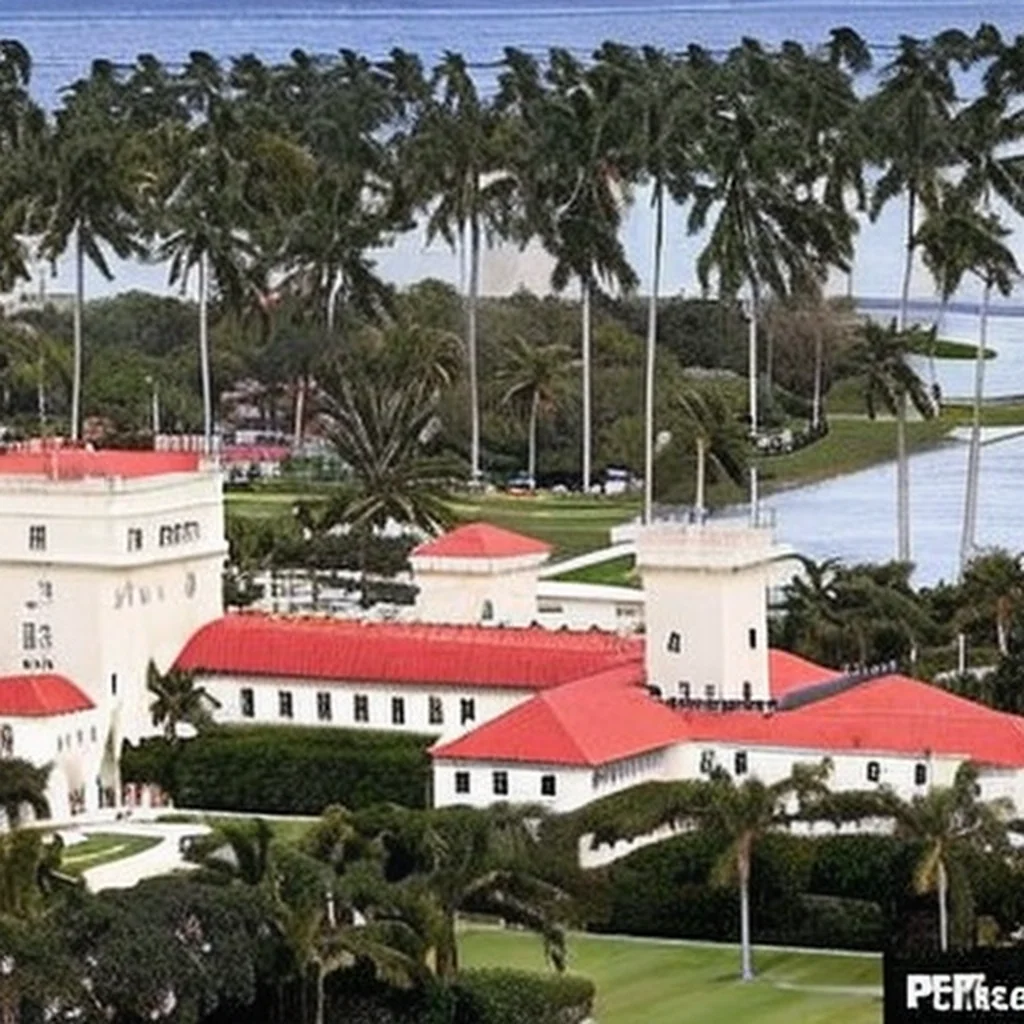
Inside the bitter personal battle between top FBI and DOJ officials over Mar – a – Lago.
2, 2021, the Department of Justice (DOJ) announced that it would investigate the January 6th Capitol riot. This announcement came after Trump had already been impeached by the House of Representatives for inciting the riot. The DOJ investigation was a significant development, as it marked the first time in history that a sitting president had been investigated for inciting an insurrection. This investigation was a direct response to Trump’s actions and rhetoric leading up to the January 6th attack. However, Trump’s supporters argue that the investigation was politically motivated and a witch hunt.
The investigation focused on Trump’s efforts to overturn the 2020 presidential election results. This included his actions leading up to the January 6th attack on the Capitol, his attempts to pressure state officials to change the vote count, and his communications with allies who were involved in the effort to overturn the election. The DOJ’s national security division, led by John Demers, was tasked with investigating the potential national security implications of Trump’s actions. They were concerned that Trump’s efforts to overturn the election could have destabilized the country and potentially led to violence.
They were wrong. The DOJ and FBI officials were caught off guard by Trump’s refusal to cooperate and his subsequent attempts to obstruct the investigation. This was a significant departure from the norm, and it raised serious concerns about the potential for future obstruction. The DOJ and FBI officials were also concerned about the potential for political interference. They had seen Trump’s past behavior, including his attacks on the media and his attempts to overturn the 2020 election, which fueled their fears. They believed that Trump’s actions could be motivated by political considerations, and they were worried about the possibility of him using the documents to further his political agenda.
This sentiment was echoed by other former FBI officials, who spoke on condition of anonymity. They expressed concerns about the political interference in the FBI, which they believed was eroding the agency’s credibility and undermining its ability to investigate threats to national security. The FBI’s reputation was further damaged by the Mueller investigation, which was widely seen as a politically motivated witch hunt. The Mueller investigation, which was led by Robert Mueller, a former FBI director, was tasked with investigating Russian interference in the 2016 presidential election.
They denied any wrongdoing, emphasizing that Bratt’s actions were consistent with his professional conduct and legal obligations. They also highlighted his past investigations into the handling of classified documents by Democrats, including Hillary Clinton.
The DOJ team, led by Bratt, was investigating the Trump Organization for potential tax fraud and other financial crimes. The investigation was highly publicized and attracted significant media attention. This high-profile nature of the investigation may have contributed to Bratt’s aggressive approach. D’Antuono’s concerns about Bratt’s behavior were not unfounded. The DOJ team did engage in some aggressive tactics, including the use of subpoenas and the summoning of witnesses.
Christopher Wray, in a rare public statement, expressed concern about the politicization of the investigation. He warned that the investigation could be used to advance partisan agendas. The summary provided highlights several key points about the Trump era and its impact on American politics. Let’s break down these points in detail:
The summary provided focuses on the unethical and illegal activities of J. Edgar Hoover, the FBI Director during the 1950s and 1960s. It highlights his perceived enemies, his use of the FBI to spy on political rivals, and the abuses committed by Justice Department officials under his leadership.
The Justice Department under the Trump administration, led by William Barr, was accused of being politically motivated and biased against the opposition. Barr’s actions, including his handling of the Mueller investigation, were widely criticized as being too lenient towards Trump and his allies. This led to a significant erosion of public trust in the Department of Justice.
He argued that Trump’s refusal to cooperate with the FBI’s requests for documents was a sign of guilt. This argument was based on the presumption that Trump’s actions were a deliberate attempt to obstruct justice. The FBI’s investigation into the classified documents was a complex and multifaceted process.
The investigation focused on the potential for classified documents to be stored at Mar-A-Lago, and the potential for Trump to have violated the Espionage Act. The investigation was conducted by the FBI, and the Department of Justice was involved in reviewing the evidence. The Department of Justice was involved in reviewing the evidence, and the Department of Justice was involved in reviewing the evidence.
This conflict was a symptom of a larger problem: the DOJ’s investigation into Trump was plagued by internal divisions and a lack of clear direction. The investigation was hampered by a lack of cooperation from Trump and his allies, who were actively trying to obstruct the investigation. The DOJ’s investigation was also hampered by a lack of resources and expertise, particularly in the areas of foreign intelligence and cybercrime.
field office, stated that the FBI had a plan in place for responding to the removal of documents from the property. This plan involved a meticulous and systematic approach, ensuring that any potential evidence of document removal was thoroughly documented and preserved. D’Antuono emphasized the importance of preserving the integrity of the evidence and avoiding any actions that could be perceived as tampering with it.
The meeting concluded with a sense of frustration and disappointment. The agents in the Washington field office were adamant about their position, and the senior FBI officials were unable to sway them. The meeting highlighted the growing tension between the FBI and the public, as well as the challenges faced by the FBI in navigating the complex relationship between law enforcement and public trust.
This fear was fueled by the Trump administration’s relentless attacks on the FBI, the Justice Department, and other federal agencies. The administration’s rhetoric was often inflammatory and aimed at discrediting the institutions. This rhetoric created a climate of fear and uncertainty within the FBI, making it difficult for agents to make objective decisions. For instance, the FBI’s handling of the 2016 election interference investigation, which involved the investigation of Russian interference in the election, was heavily scrutinized by the Trump administration.
1, 2023, the Justice Department announced that the FBI had completed its search of Mar-a-Lago. The Justice Department’s announcement came after a lengthy and contentious debate over the search warrant, with some arguing that it was too broad and potentially illegal. The debate was fueled by concerns about the potential for political interference and the erosion of trust in the government.
* Trump’s goal regarding the DOJ and FBI has been clear during and after his presidency. * He wants to control the DOJ and FBI, seeing them as tools for his own political purposes. * This goal has been evident in his actions and statements. **Detailed Text:**
Donald Trump’s presidency was marked by a persistent and often contentious relationship with the Department of Justice (DOJ) and the Federal Bureau of Investigation (FBI).
This has been achieved through a consistent pattern of attacks on the institutions, their leadership, and their integrity. These attacks have been amplified by the former president’s own rhetoric and the media coverage that has often mirrored his sentiments. The summary provided highlights the impact of Trump’s actions on the DOJ and FBI. It emphasizes the extent to which he has damaged their reputation and public trust. To further explore this, let’s delve into the specific tactics employed by Trump and the consequences of these actions. Trump’s attacks on the DOJ and FBI have been multifaceted and persistent.
This is a significant concern because these agencies are essential for upholding the law and protecting the public. The summary highlights the potential consequences for former FBI agents who are involved in politically charged cases. Let’s delve deeper into these consequences:
* **Explanation:** Politically charged cases often attract intense public scrutiny and criticism, leading to negative perceptions and attacks on the agents involved. * **Example:** The investigation into Hillary Clinton’s email server during the 2016 presidential election was highly politicized, with some individuals accusing the FBI agents involved of bias and misconduct.

news is a contributor at ChairBuzz. We are committed to providing well-researched, accurate, and valuable content to our readers.