
A mural honoring scientists hung in Pfizer NYC lobby for 60 years . Now it up for grabs.
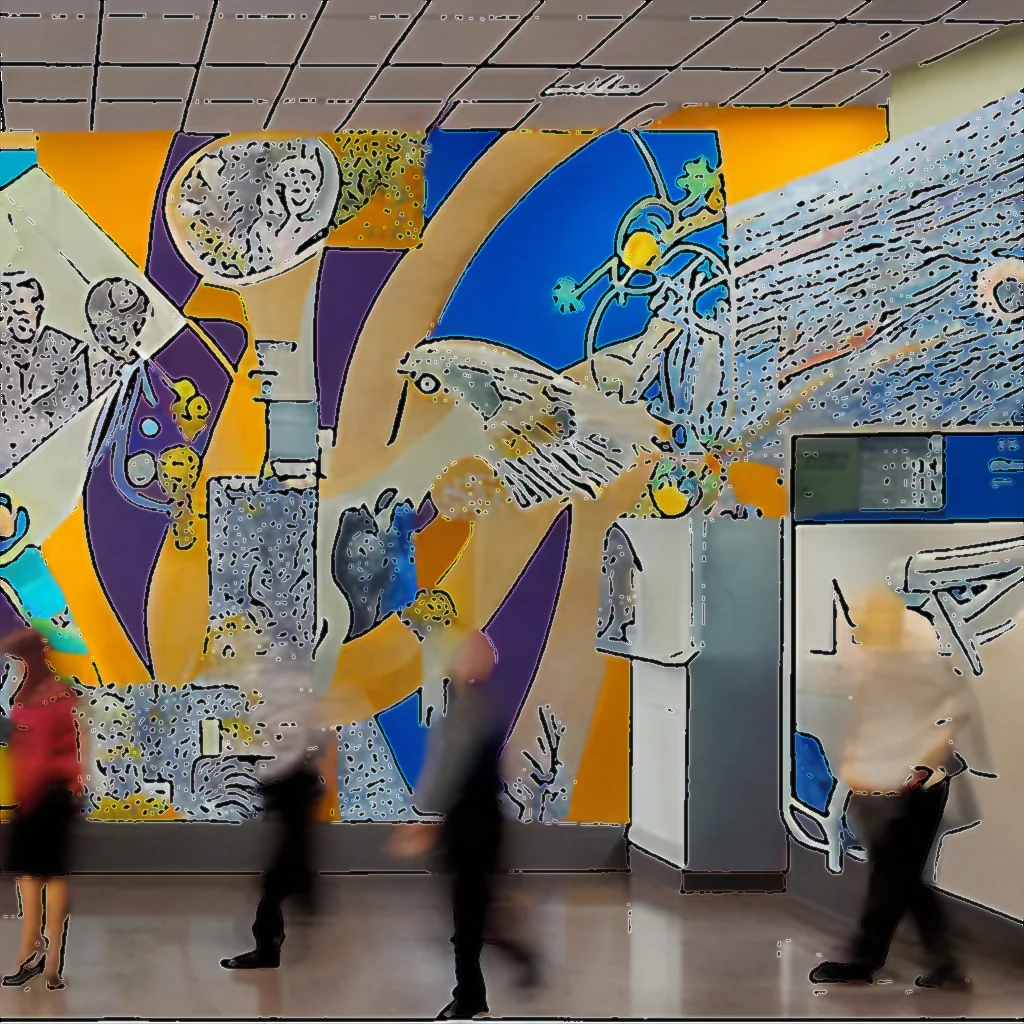
The mural depicts a timeline of medical research, from ancient times to the present. The mural is a testament to the history of medical research and its impact on society. The mural’s creation was a collaborative effort, involving the artist, Pfizer’s research and development team, and the company’s marketing department. The artist was inspired by the company’s history and the advancements in medical research that Pfizer had made. The mural’s design was based on the company’s research and development efforts, and the artist incorporated elements of the company’s logo and branding into the design.
The late artist, known for his abstract expressionist works, has left behind a significant and valuable piece of art. The piece, a large-scale abstract painting, is currently in a private collection. It is estimated to be worth tens of thousands of dollars. The artist’s daughters are now seeking a patron to help them move and remount the painting, as well as an institution to display it. They envision the artwork being part of an educational future, potentially on a hospital campus or a school or college. **Detailed Text:**
The passing of a renowned abstract expressionist artist has left behind a legacy of artistic brilliance, but also a significant challenge for his family.
The mosaic mural, titled “Medical Research Through the Ages,” was created in 1960 by Greek-born artist Nikos Bel-Jon. The mural depicts a series of historical figures from various fields of medicine, including Egyptian mythology, ancient Greece, and the Renaissance. The mural is located in the lobby of the old Pfizer headquarters in New York. The mural showcases the evolution of medical research and its impact on society. It highlights the contributions of various cultures and eras, emphasizing the interconnectedness of medical knowledge across time.
The Bel-Jon family is seeking to relocate their beloved statue of the Greek god Zeus, known as the “Zeus of the North,” to a new home. The statue, a significant cultural artifact, has been in the city of Duluth, Minnesota, for decades. The family is facing a significant financial burden in relocating the statue, estimated to cost between $20,000 and $50,000. The statue, a prominent landmark in Duluth, has been a source of pride for the city’s residents.
“It was a vibrant, almost psychedelic experience,” Calkins, a former museum curator, recalled. “The colors would shift and change, creating a sense of movement and energy.”
This vibrant past is now a fading memory, lost to time and neglect. The museum’s original lighting scheme, a masterpiece of its time, has been replaced with a generic, uninspired, and frankly, dull lighting scheme. The museum’s current lighting scheme, a stark contrast to its former glory, is a source of frustration for many visitors.
The mosaic mural depicts various medical figures and their contributions to the field of medicine. The mosaic mural, located in the lobby of the old Pfizer headquarters in New York, is a testament to the history of medical research and innovation. It showcases the contributions of numerous medical figures, including Dr. Edward Jenner, who revolutionized the field of medicine by developing the smallpox vaccine.

news is a contributor at ChairBuzz. We are committed to providing well-researched, accurate, and valuable content to our readers.