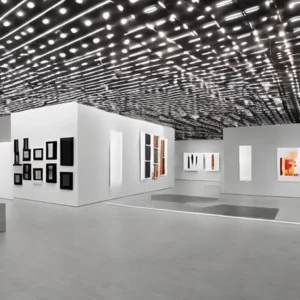
A mural honoring scientists hung in Pfizer NYC lobby for 60 years . Now it up for grabs.

The mural, titled “The Healing Touch,” was created in 1959 by artist Robert C. Smith. It depicts a diverse range of historical and contemporary figures in medicine, including physicians, nurses, scientists, and patients. The mural is a testament to the history of medicine and its impact on society. The mural’s future is uncertain because Pfizer’s headquarters is undergoing a major renovation.
I think it’s a powerful piece of art that would be a great asset to any institution,” said the artist’s daughter, who wished to remain anonymous. The artist, whose work is known for its bold and colorful use of paint, was a prominent figure in the late 20th century. His work was often characterized by its abstract expressionism, with a focus on color and texture. His art was highly sought after by collectors and galleries, and his work was featured in numerous exhibitions. He was a prolific artist, producing a large body of work, and his legacy continues to inspire artists today.
The company’s decision to sell its iconic building, located in the heart of Manhattan, was driven by a desire to streamline its operations and reduce costs. The building, which was once home to the iconic “Pfizer Plaza,” was a symbol of the company’s long history and presence in the city. However, the company’s decision to sell the building was met with mixed reactions from the community. Some residents and business owners were disappointed by the loss of a landmark building, while others were supportive of the company’s decision to streamline its operations. The sale of the building was part of a larger trend of companies downsizing and relocating their headquarters to more cost-effective locations.
The deadline for the mural’s removal is fast approaching, and the city is not providing any assistance. The mural, a vibrant and colorful depiction of a historical event, is a source of pride for the community. It has been a focal point of the neighborhood for years, attracting visitors and fostering a sense of belonging. The mural’s removal is a significant blow to the community, as it represents a tangible connection to their history and identity. The mural’s removal is a complex issue with multiple stakeholders involved.
The Bel-Jon building, a 1950s-era structure, is a prime example of the mid-century modern architectural style. It features a distinctive, angular design with a flat roof and large windows. The building’s exterior is clad in a distinctive, textured concrete that gives it a unique and striking appearance. The Bel-Jon building is located in Columbus, Indiana, a city known for its rich history and vibrant arts scene. The building is situated in a neighborhood known for its historic architecture and is surrounded by other notable buildings from the same era.

news is a contributor at ChairBuzz. We are committed to providing well-researched, accurate, and valuable content to our readers.